















The Doctor Is In
The Top 10 Cybersecurity Symptoms and How to Treat Them
This Splunk health check assessment guide covers the top 10 symptoms we see most often in our practice, and the treatments we recommend to help clients strengthen their defenses cost effectively, while getting the most out of their investments.

Take the Guide With You
Is Your Splunk Instance Running at Peak Health?

Splunk is the nervous system for your security operations. Its ability to ingest data from servers, applications and endpoints, enables your team to confidently and proactively respond to potential threat incidents. But when Splunk is not properly configured or tuned, it can complicate your security defenses.
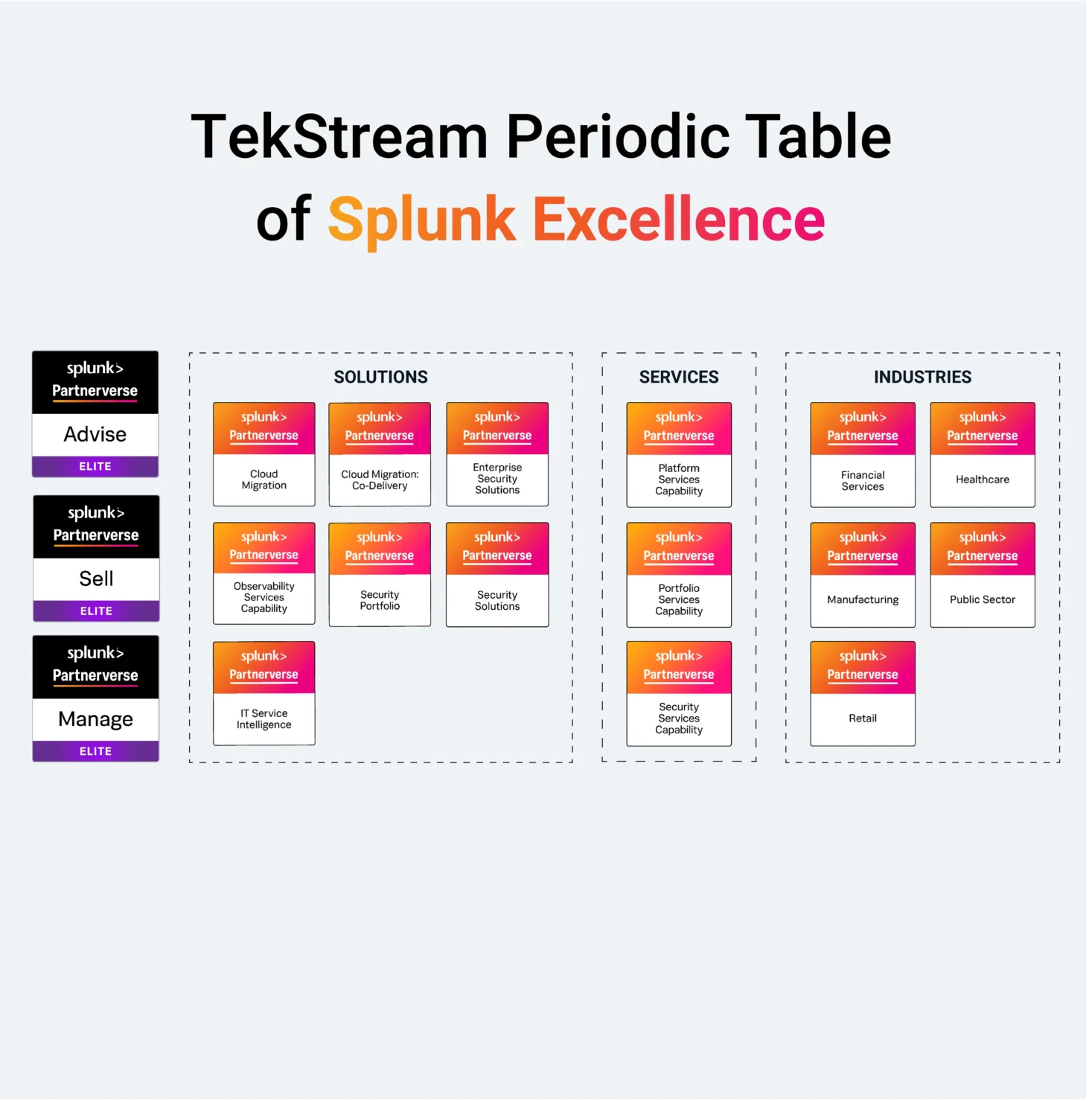
False alerts, sluggish search performance and ingestion issues are all symptoms your Splunk instance may be due for a health check. But they’re not the only ones. As an Elite Splunk partner, we know the best way to keep your nervous system strong is to uncover the root cause of any symptom and prescribe the right remedy.

Symptom 1: High Licensing and Data Ingestion Costs
Diagnosis
Splunk pricing is based on data ingestion or infrastructure usage. A high data and usage model typically indicates that there’s too much noise entering the system based on the license model being used, showing up as unexpected cost overruns that impact ROI.
TekStream Treatment
Implement summary indexing and Splunk Ingest Actions to develop the right ingestion strategy based on the organization’s security goals. This remedy reduces noise at the source and enables organizations to right-size their Splunk license model, achieving cost savings from proper use.



Symptom 2: Data Volume and Retention Limits
Diagnosis
Growing data volume does more than push licensing costs up and pressure test your retention limits. It compromises search performance and puts you at risk of non-compliance if you’re in a highly regulated industry.
TekStream Treatment
Design hot/warm/cold storage tiered retention policies by using Splunk SmartStore to offload data into a cloud object storage. Leverage Splunk federated search to keep older data searchable without impacting licensing costs.


Symptom 3: Complex Infrastructure
Diagnosis
Self-managed Splunk instances often result in bloated environments that are challenging to tune and scale due to limited resources, competing IT priorities or new initiatives. The result is added complexity that hinders growth, agility and cloud migration opportunities while increasing costs.
TekStream Treatment
Deploy Terraform or Ansible to simplify Splunk management with infrastructure-as-code. Develop seamless cloud migration roadmaps with minimal disruption while maximizing capability, and offering ongoing, on-demand support so teams can focus on outcomes instead of patching or search head maintenance.

Symptom 4: Slow Search Performance
Diagnosis
Slow search and timeouts equal more dwell time for threat actors to compromise your defenses. Poorly written search processing language (SPL) or a lack of data model accelerations are often the culprit behind sluggish search times.
TekStream Treatment
Rewrite and optimize SPL, implement data model acceleration and build search head clustering strategies so the system can handle more queries at once. Conduct ongoing performance health checks to proactively reduce query times from minutes to seconds, improving team productivity.

Symptom 5: Data Onboarding and Normalization Challenges
Diagnosis
Improper data formats and normalization practices impact Splunk ingestion, resulting in teams spending more time troubleshooting dashboard issues than investigating threat incidents.
TekStream Treatment
Standardize data ingestion with reusable templates to shorten time-to-value. This is accomplished by powering Splunk ES or Splunk ITSI using Splunk Technology Add-Ons (TAs) to align data with Common Information Model (CIM), enabling each new data source to be “fast-track ready.”

Symptom 6: Lack of Skilled Resources
Diagnosis
Finding skilled talent to properly staff and run Splunk is both challenging and expensive. Without the right level of support, teams can find themselves burning out and overwhelmed, resulting in high turnover rates and an expanding threat surface.
TekStream Treatment
We provide skilled Splunk engineers who support and train existing talent, develop a talent pipeline and address immediate needs while supporting long-term goals. This approach is also supported by the use of automation and out-of-the-box content to deploy prebuilt detections that drive immediate wins.


Symptom 7: Alert Fatigue and False Positives
Diagnosis
Too much noise from false positives pulls teams away from focusing on real threats. Overwhelmed by the number of alerts, teams often get frustrated and stop paying attention.
TekStream Treatment
Deploy Risk-Based Alerting (RBA), tune correlation searches and enrich alerts with threat intel data to reduce alerts from thousands to 5-10 that matter most. With greater insights, teams become more adept at threat detection and response.

Symptom 8: Dashboard and Reporting Limitations
Diagnosis
Out-of-the-box Splunk dashboards can be too slow or clunky, making it hard for end users to determine what is immediately actionable and what is not.
TekStream Treatment
Build dynamic and actionable role-based dashboards in Splunk that are also executive-ready with glass tables and KPIs. Integrate Splunk outputs with Tableau or Power BI to help executives connect data points to business outcomes.

Symptom 9: Upgrade Risk and Version Compatibility
Diagnosis
Upgrades and add-ons can break apps and custom configurations, leading to unplanned downtime due to inadequate testing and planning. Long-term, teams can view upgrades as risky, impacting innovation and agility.
TekStream Treatment
Leverage proven TekStream Splunk upgrade playbooks to help customers manage upgrades and reduce downtime risk. Playbooks include sandbox testing, version compatibility validation and rollback planning.
Symptom 10: Lack of Strategic Use or Visibility
Diagnosis
Splunk is a robust tool that can be used for fraud detection, observability, compliance and business analytics. Yet most teams use Splunk for basic logging and monitoring, leaving unrealized value on the table for a premium product.
TekStream Treatment
Run Splunk maturity assessments and build roadmaps that align with long-term goals, helping organizations maximize ROI and gain board-level visibility.

Your Splunk Clean Bill of Health Awaits
Splunk is a powerful tool when wielded properly. But setting it up requires knowing where all the knobs and levers are to create an instance that works for your security goals and organization. Without that expertise, proper setup and ongoing health checks, you might wonder if your investment was worth it.
We’re here to tell you not to give up. A right-sized Splunk instance that works for you and not against you is within reach. Like a good doctor, we believe in diagnosing instead of prescribing. If any of these symptoms apply, get in touch for a 30-minute complimentary consultation to validate your hunch.
Every organization requires a robust security operations nervous system. Let us help.